
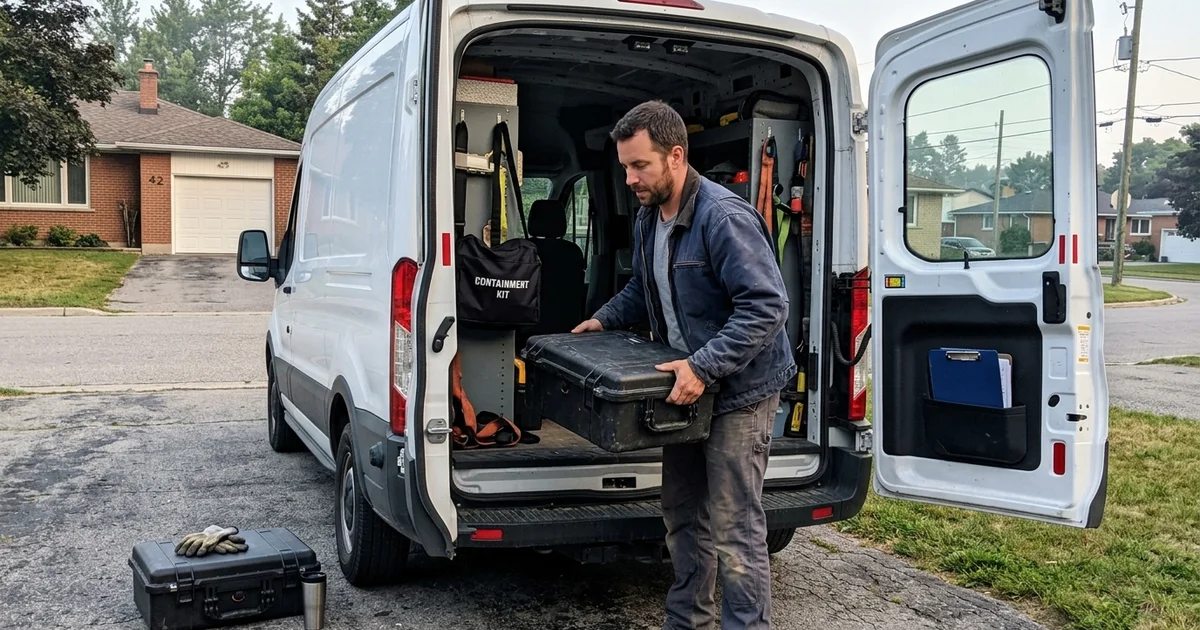
Start with an honest question
Before the licensing and the equipment lists, ask yourself whether you can do the work.
Not physically. Emotionally. You will be in rooms after the worst thing that has ever happened to a family, sometimes with that family in the next room. You will handle things that are difficult to be near. You will carry some of it home for the first year.
Plenty of capable people decide the answer is no, and that is a perfectly good outcome from asking. Everybody who says yes and lasts has thought about it first.
If the answer is yes, Bio-Recovery Technician Training is where it starts, and this guide is the practical sequence that follows.
Step 1: Certification comes first
This is not sequencing for its own sake.
Insurers will not write a policy without it. Regulated Medical Waste facilities will not open an account without it. Property managers, funeral directors, and referral sources will not send you work without it. And on a practical level, you cannot safely do this without knowing what you are handling.
Our guide on what bio-recovery technician certification covers explains what the credential includes and the standards behind it.
Step 2: Legal structure and licensing
Form an entity. An LLC is the usual choice and separates personal assets from business liability, which matters in a trade with genuine exposure.
Licensing requirements vary considerably by state and sometimes by municipality. Some states regulate biohazard remediation specifically. Others treat it under general contractor or waste handler licensing. Some have little specific requirement at all. Check your state, and check the cities you plan to operate in, because they are not always the same answer.
Also register for a waste generator identification where your state requires it, before you take your first job rather than after.
Step 3: Insurance
The category that surprises people with its cost and its necessity.
| Coverage | Why you need it |
|---|---|
| General liability | Baseline requirement for essentially every client and building |
| Pollution liability | Covers biohazard-specific exposures general liability excludes |
| Workers compensation | Required once you have employees, and this is high-risk work |
| Commercial auto | Personal policies exclude business use and will deny claims |
| Professional liability | Covers claims of inadequate or incomplete remediation |
Pollution liability is the one new operators most often miss, and it is the one a property manager will ask about by name.
Expect to provide certificates of insurance routinely. Apartment buildings and commercial clients will require them before your crew is allowed through the door.
Step 4: Equipment, in the right order
The most common way new operators run out of money is buying the impressive equipment before the jobs that need it.
Day one, genuinely necessary: PPE including Level C ensembles, fit-tested respirators and cartridges, nitrile gloves in quantity, containment plastic and tape, a HEPA air scrubber, hand tools, sprayers, EPA-registered disinfectants, biohazard red bags and DOT-approved containers, and a work vehicle.
Once the work exists: a second air scrubber, hydroxyl generator, ozone generator, ATP fluorometer, 4-gas monitor, and a truck-mounted extractor.
Later, or never: the specialist equipment you have seen in videos. You will know when a job requires it, and until then it depreciates in a garage.

Step 5: Waste disposal account
Set this up before your first job, not during it.
You need an account with a licensed Regulated Medical Waste disposal facility that serves your area, and a manifesting process. Discovering on a Friday afternoon that you have containers in your van and nowhere lawful to take them is a bad way to learn this.
Step 6: Pricing
The quiet killer. Most new operators underprice for a year, stay busy, and make no money.
Price the actual scope: crew hours, PPE consumed and disposed of, disposal tonnage and manifesting, equipment time, travel, insurance overhead, and margin. PPE is a per-job consumable, not an asset, and it is the line most often forgotten.
Publish ranges if you can bear to. It is unusual in this industry and it is a genuine differentiator, because clients researching at two in the morning are comparing companies on whether anybody will tell them a number.
Never quote firm over the phone
Get photographs. A number given blind is a number you will either lose money on or have to revise upward in front of a grieving family. Neither builds a business.
Step 7: Where the work actually comes from
Not from advertising, at least not at first.
Referral relationships are the foundation: funeral homes, property management companies, landlords, probate attorneys, estate liquidators, and social services. Introduce yourself, explain what you do and what documentation you provide, and be reliable.
Local search matters because this is an emergency-intent category and people search at the moment of need. A site that answers the real questions, publishes pricing, and explains process will outperform a brochure.
Insurance adjusters refer to companies whose documentation makes their job easier. Itemized scope, photographs, disposal manifests, verification results. Do that consistently and referrals follow.
Being available may be the largest single factor. A call answered at three in the morning is a job. A voicemail is not.
Step 8: Build the documentation habit early
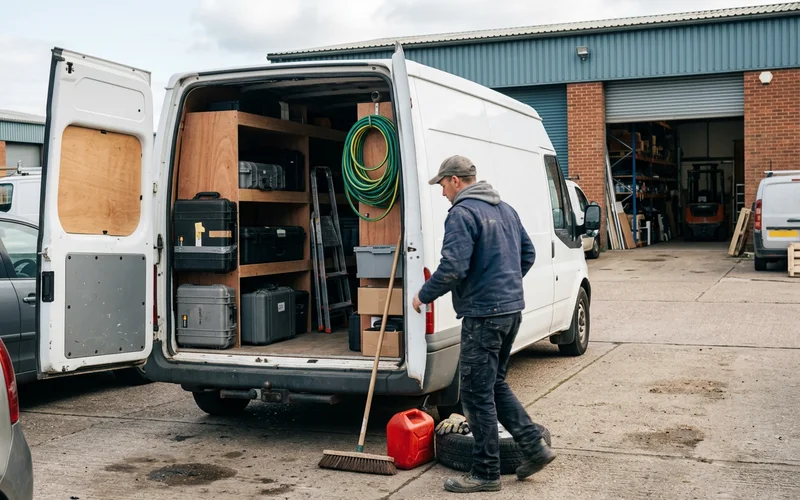
Every job: before photographs, itemized scope, disposal manifests, verification results, after photographs, delivered as one package.
It serves insurers, executors, inspectors, and out-of-state families. It also protects you when somebody questions what was done six months later. Operators who build this habit in year one look established by year two.
The full business curriculum, including pricing worksheets and a realistic equipment budget, is module seven of our certification course.