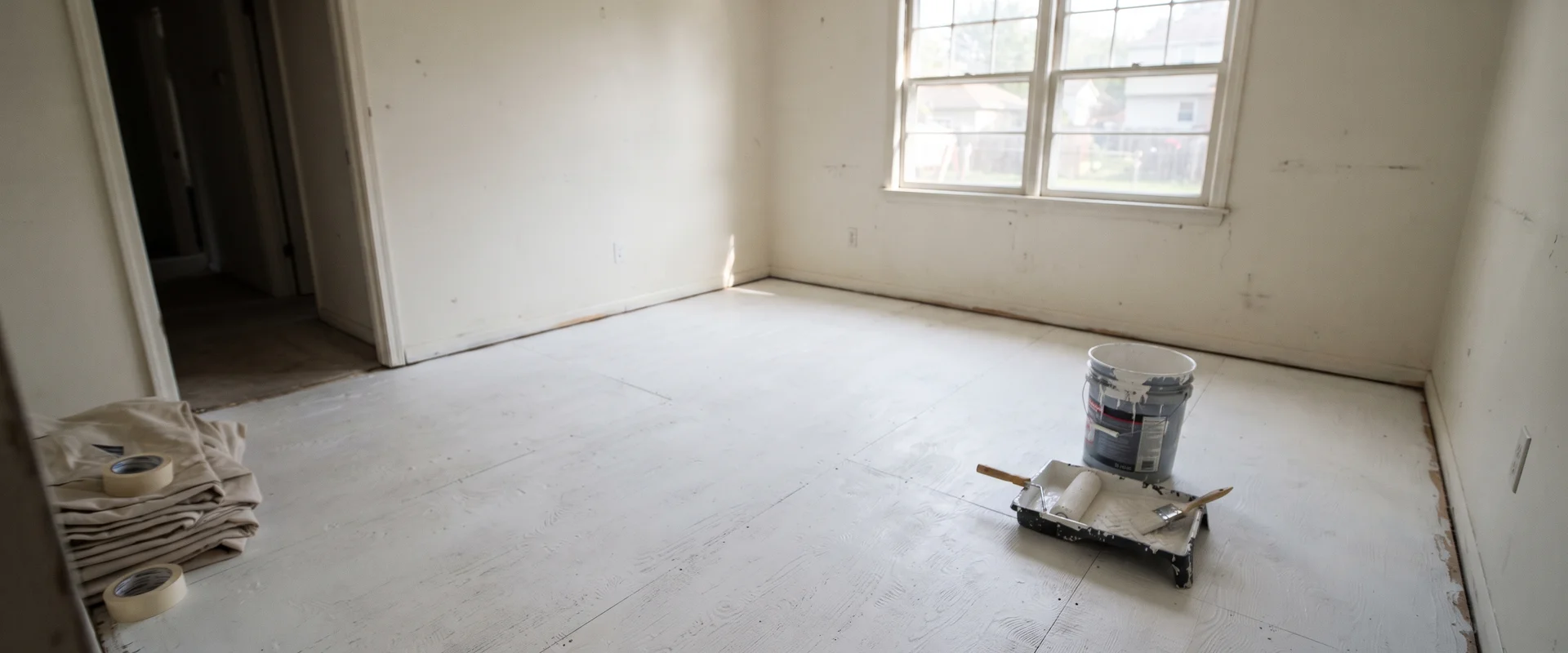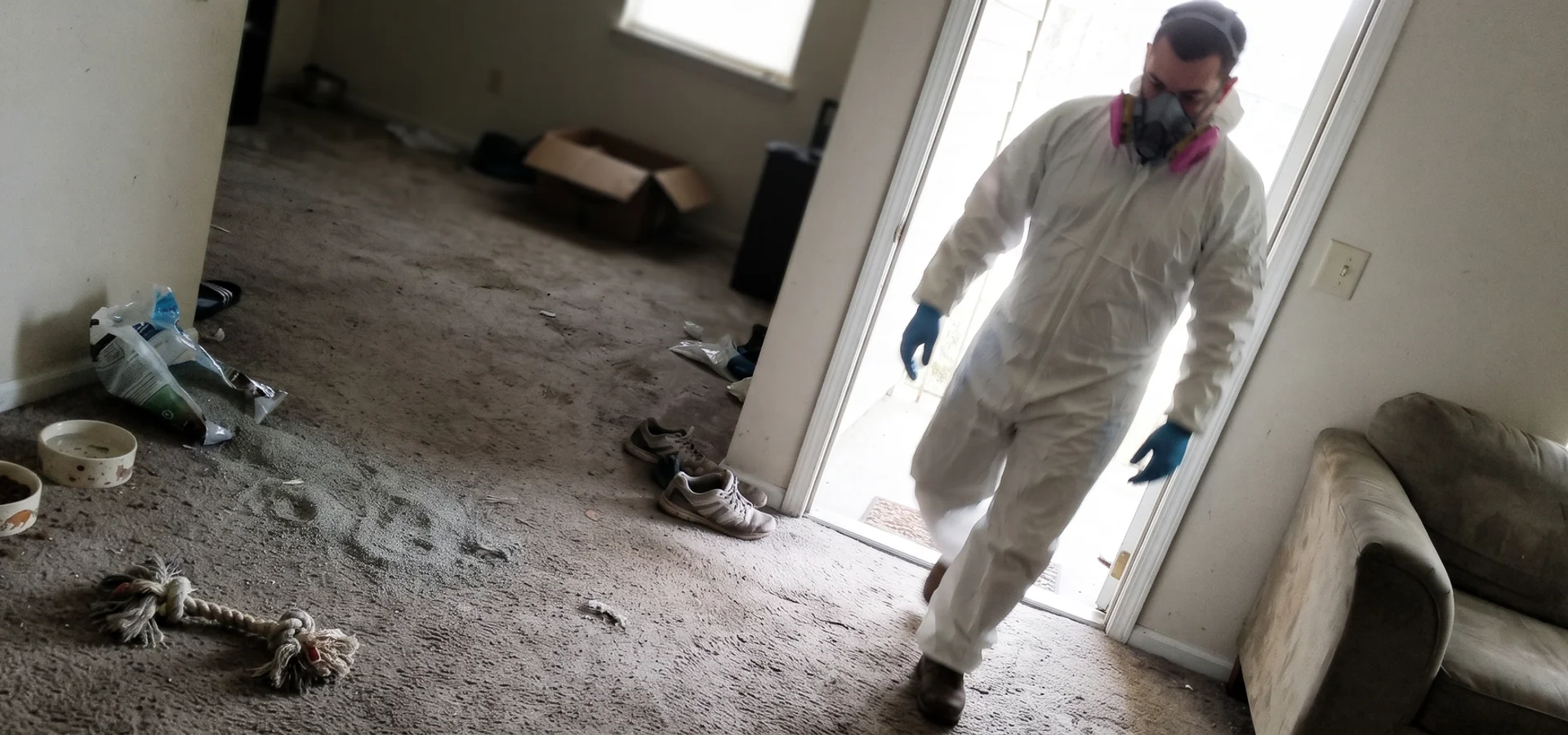
What is animal hoarding and pet feces remediation?
Severe animal hoarding and pet squalor carry biohazards that ordinary cleaning cannot safely address. Ammonia toxicity from saturated urine, zoonotic pathogens in feces, and rodent-borne disease in dander and droppings all sit in the same property, and each one requires different handling. This is remediation work, not deep cleaning, and the distinction is not academic when someone is about to walk into the house without a respirator.
We assess with 4-gas atmospheric monitoring before anyone enters, checking ammonia, hydrogen sulfide, carbon monoxide, and lower explosive limit. In heavily affected homes the ammonia reading alone is often enough to keep a homeowner outside until the property has been ventilated. From there we remove saturated flooring and materials, extract feces and gross filth, HEPA-vacuum rodent dander and droppings, apply bio-enzymatic treatment to break down residual urine crystals, and seal the substrate with antimicrobial primer.
The reason so many of these jobs come to us as second attempts is simple. Urine does not stay in the carpet. It goes through the carpet, into the padding, into the plywood or plank subfloor, and in long-standing cases into the joists. Shampooing the surface removes the stain and leaves the source. Three weeks later, the first warm humid day brings all of it back, and the homeowner assumes nothing can be done.
Something can be done. The result is a home restored to sellable, livable condition, with before and after documentation for landlords, sellers, and realtors who need to show a buyer that the problem was solved rather than covered.
Common problems we solve
Air that is not safe to breathe
Concentrated ammonia is the hazard people walk into without thinking. Our first action on these jobs is a monitor reading at the door, and occasionally our advice is that nobody goes in until we have ventilated.
Odor that returns after a professional carpet cleaning
If the padding and subfloor were left in place, the source is still there. We remove, treat enzymatically, and seal, which is the only sequence that produces a permanent result.
A rental that cannot be shown or leased
Landlords call us when a unit is unrentable and the turnover clock is running. Full flooring removal, sanitization, odor abatement, and documentation get the unit back on the market.
Rodent contamination underneath the pet damage
Where food and waste have accumulated, rodents follow. Dried droppings must be HEPA-vacuumed rather than swept, because sweeping aerosolizes hantavirus. We handle that as part of the same scope.
What’s included
- 4-gas atmospheric monitoring for ammonia, hydrogen sulfide, carbon monoxide, and LEL before entry
- Saturated carpet, padding, and flooring removal and disposal
- Gross filth and animal fecal waste extraction
- HEPA-filtered vacuuming for rodent dander, droppings, and nesting material
- Disinfection of hard surfaces against toxoplasmosis, hantavirus, and leptospirosis
- Bio-enzymatic treatment to break down residual urine crystals in the substrate
- Subfloor encapsulation with antimicrobial primer sealant
- Source-level odor neutralization and before and after reporting for owners and realtors
How this compares to the alternatives
| The contamination | Standard carpet cleaning | Animal waste remediation |
|---|---|---|
| Air quality before entry | Not measured | 4-gas monitoring for ammonia, hydrogen sulfide, carbon monoxide, and LEL |
| Urine that reached the subfloor | Shampooed at carpet level only | Saturated carpet, padding, and flooring removed, substrate treated |
| Uric acid crystals | Detergent cannot break them down | Bio-enzymatic treatment followed by antimicrobial primer sealant |
| Droppings and nesting material | Swept, which aerosolizes pathogens | HEPA-filtered vacuuming, then disinfection for toxoplasmosis and hantavirus |
| Result three months later | Odor returns with heat and humidity | Source removed and sealed, with before and after reporting |