
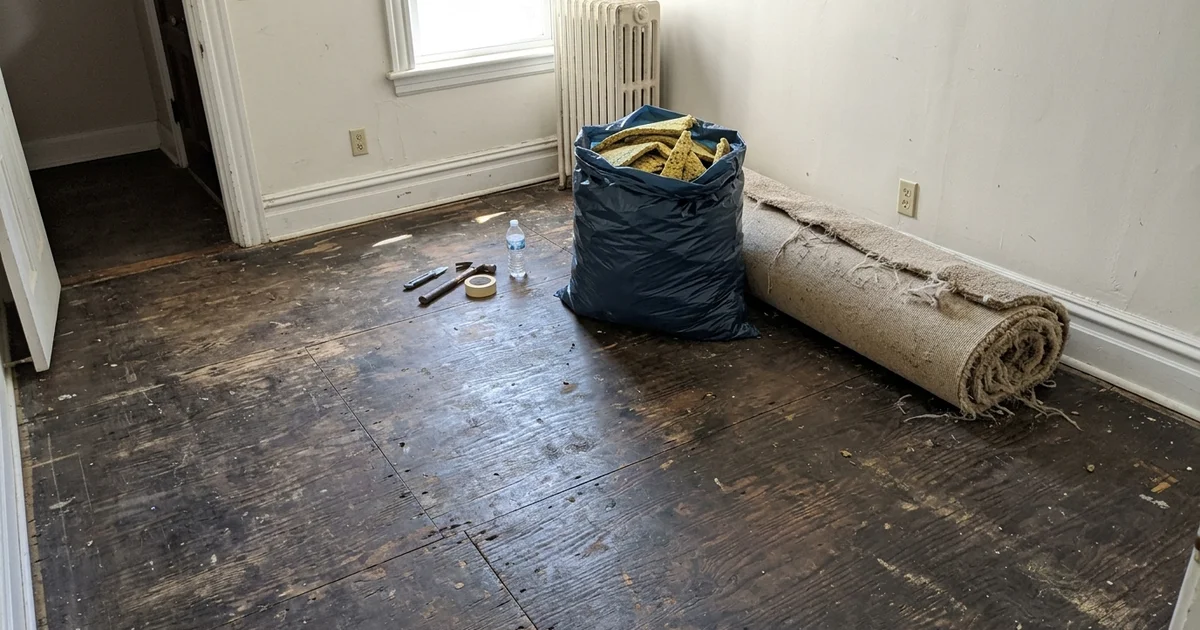
Why some smells simply will not leave
You have cleaned. Possibly more than once, possibly professionally. The room looks fine. And the smell is still there, or it goes away for a week and comes back.
There is a specific physical reason for this, and once you understand it every subsequent decision becomes obvious. The problem is not in the air. It is in the material, and the air is only where you are noticing it.
Resolving that properly is Severe Odor Removal work, and this guide explains what is actually happening.
Odor is a molecule, not a feeling
Smells are volatile organic compounds: small molecules light enough to become airborne and reach the receptors in your nose. Human beings detect many of them at extraordinarily low concentrations, which is why a quantity of residual material far too small to see is more than enough to be smelled across a room.
Those molecules originate from a source, and in a house the source is almost always something that soaked into something absorbent.
Where they hide
| Material | Why it holds odor |
|---|---|
| Carpet padding | Open-cell foam, acts as a reservoir far beyond the carpet above |
| Plywood or plank subfloor | Absorbs into grain and travels along seams |
| Drywall | Wicks upward from the floor line and holds smoke compounds particularly well |
| Insulation | Fibrous and porous, essentially impossible to clean in place |
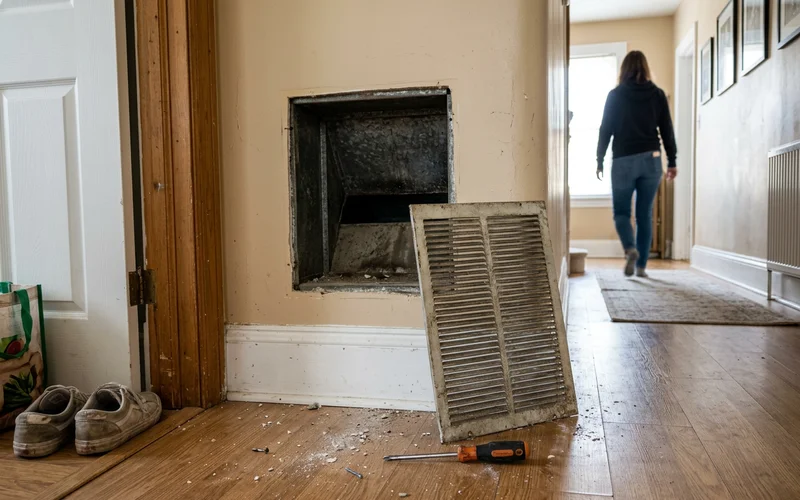
| HVAC ductwork | Distributes odor to rooms with no contamination at all |
| Upholstery and mattresses | Deep absorption throughout the fill |
The visible area is almost never the affected area, and the room where you notice the smell is not always the room containing the source. HVAC distribution in particular fools people constantly.
Why it comes and goes
Trapped molecules release at a rate governed by temperature and humidity. Warm and humid frees them; cool and dry suppresses them.
This produces the pattern everyone describes: a property that seems resolved in a ventilated October and is unbearable when the furnace runs in January. Nothing about the contamination changed. Only the conditions releasing it did.
It also explains why the week after a cleaning appears successful. Ventilation and disturbance temporarily clear the air, and the reservoir underneath quietly refills it.
The test that tells you everything
Close the property up for 48 hours with the heat on and then walk in. If the smell is there, the source is still in the building.
Why the usual fixes fail
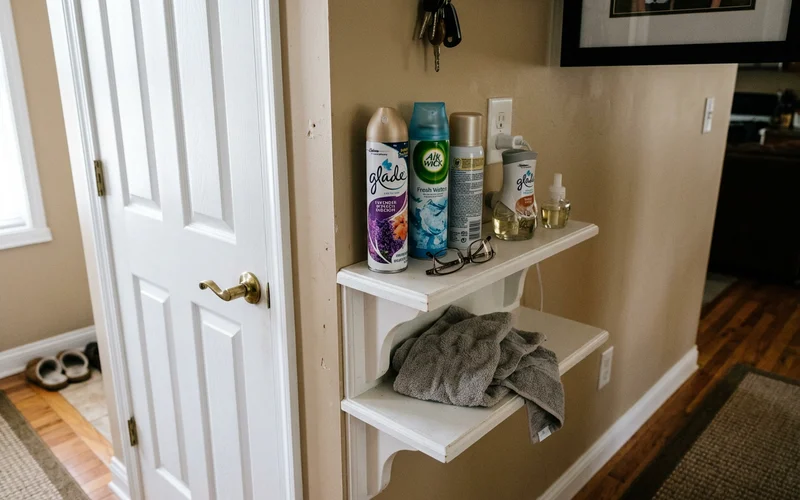
Air fresheners and deodorizing sprays add compounds to the air rather than removing anything. Some react with existing odor molecules to produce a combined smell that is worse than the original.
Carpet shampooing cleans fibres and leaves padding and subfloor untouched. It also introduces moisture, which can temporarily increase release.
Painting over odor-contaminated drywall without a sealing primer traps nothing. Smoke compounds in particular come through a standard coat within weeks.
Ozone alone treats air and reachable surfaces. It does not reach a saturated subfloor under intact flooring, so the source survives the treatment.
Each of these fails for the same reason: they operate on the air or the surface, and the problem is neither.
What actually works, in order
- Find the source, including lifting flooring where indicated and assessing HVAC.
- Remove the saturated material. Porous material cannot be decontaminated in place.
- Treat the substrate with a bio-enzymatic cleaner that breaks the compounds down.
- Seal with antimicrobial primer so anything residual cannot re-release.
- Then treat the air, with hydroxyl or ozone depending on occupancy.
The order is not flexible. Every step out of sequence is money spent on a result that will not hold.
For how the air treatment technologies actually work and which one suits which situation, our guide on how ozone and hydroxyl odor treatment works covers both, including the safety rules that matter with ozone.