
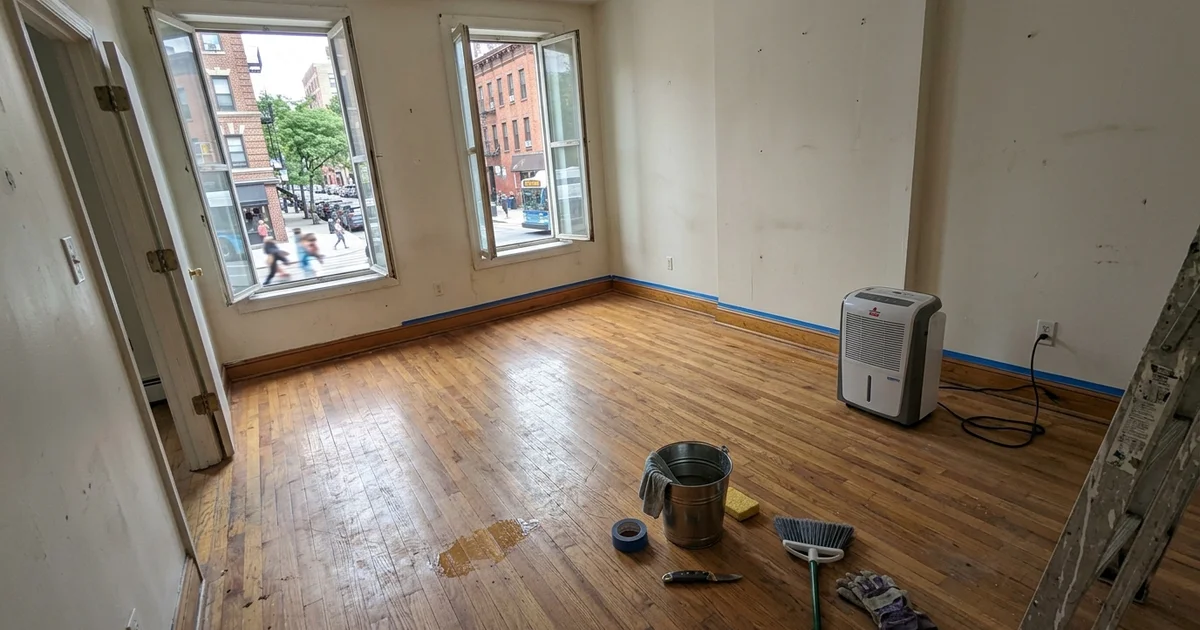
The turnover problem nobody budgets for
Most turnovers are paint, clean, and re-key. Then occasionally a unit comes back where the smell walks out to meet you in the corridor, and the standard turnover process does not touch it.
Shampooing the carpet and painting the walls will not fix it, and the reason is that neither reaches the source. Getting it right is Severe Odor Removal work, and for a landlord the two things that matter are that it is permanent and that it happens before the lease date.
The three sources we see most in Northeast Ohio
Pet urine. The most common and the most underestimated. Urine passes through carpet into padding and then into subfloor, where it crystallizes. A carpet clean removes the stain and none of the source. In units with multiple animals, ammonia concentration can also be high enough that we check the air before entry.
Cigarette smoke. Long tenancies bind tar and odor compounds into drywall, trim, and HVAC ductwork. Painting over it traps nothing and it comes through the new coat within weeks. Smoke turnovers need cleaning, a sealing primer, HVAC assessment, and then air treatment.
Gross filth and abandoned contents. Units left with spoiled food, waste, or pest activity after an eviction or an unattended death need remediation rather than cleaning. That is a different scope and a different crew.
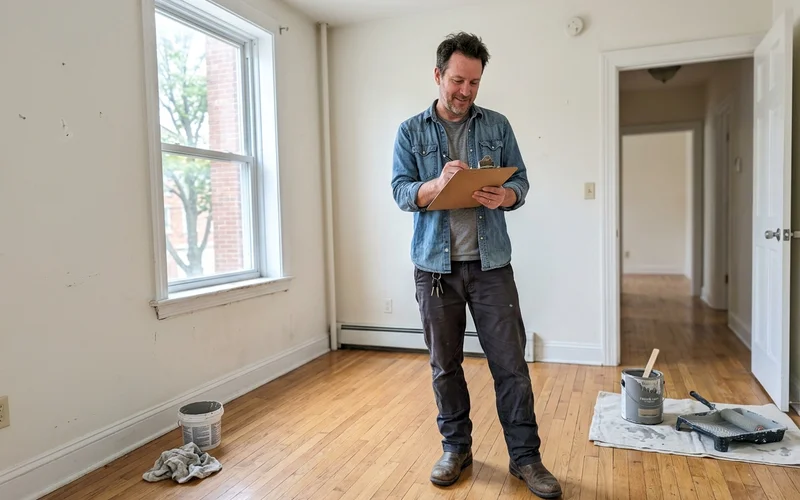
The mistake that costs the most
Running a rented ozone machine over intact flooring. It smells fixed for a week, the new tenant moves in, and in January when the heat has been running for a month you get the call. Now you are remediating properly and managing a tenant relationship at the same time.
The sequence that actually holds
| Step | What happens | Why it matters |
|---|---|---|
| 1. Find the source | Lift flooring where indicated, assess subfloor, drywall, HVAC | Treating air without the source is why odor returns |
| 2. Remove | Carpet, padding, saturated porous material | Porous material cannot be decontaminated in place |
| 3. Treat | Bio-enzymatic digester on the substrate | Breaks down compounds cleaning cannot reach |
| 4. Seal | Antimicrobial primer over the treated subfloor | Stops residual compounds re-releasing |
| 5. Treat the air | Hydroxyl, or ozone in an empty unit | Neutralizes what remains airborne |
| 6. Verify and document | Confirm resolution, photograph, report | Evidence for the next tenant or your owner |
Three to four days end to end for most single units. That is the number to plan your lease date against.
Multi-unit buildings need one extra step
In Cleveland, Lakewood, and Euclid, where pre-war doubles and mid-century apartment buildings dominate, odor and contamination migrate between units through shared subfloor, shared basement cavities, and shared ventilation.
If the source unit is bad enough that you are reading this, assume the adjacent unit needs assessing. We check it during the walkthrough and tell you honestly. It is considerably cheaper to check now than to remediate two units after a new tenant complains.
During the work we seal the unit and run HEPA negative air so occupied apartments are unaffected. Neighbours should see a van and nothing else.
Scheduling notes for our service area
Lakewood and Cleveland. Tight streets, minimal driveway width, and sometimes a right-of-way permit for a container. Give us the address early and we sort the logistics before booking the crew.
Parma, Brook Park, and Garfield Heights. Single-width driveways throughout. We size containers to the driveway and schedule swaps rather than blocking the street.
Mentor and the lakefront. Humidity accelerates mould on top of the original odor source. Those jobs usually pair remediation with dehumidification, and they benefit from being handled before winter rather than after.
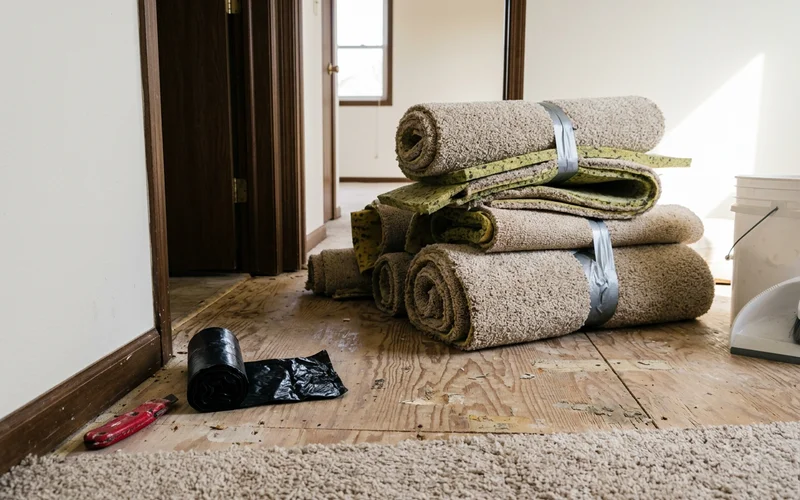
Documentation, and what it is worth
You get before photographs, itemized scope, disposal records where regulated material was involved, and after photographs, all through the Client Portal as one link.
Two uses. First, a prospective tenant who has heard something about the previous occupant can be shown a documented remediation record, which turns an awkward showing into a straightforward one. Second, where you are considering a security deposit deduction, documented before and after evidence is what makes it defensible. What you do with that is between you and your attorney, but you cannot use evidence you never collected.
For how the air treatment stage actually works and which method suits an empty unit versus an occupied one, our guide on ozone and hydroxyl odor treatment covers both, including the safety rules that matter.