
The two pressures you are managing at once
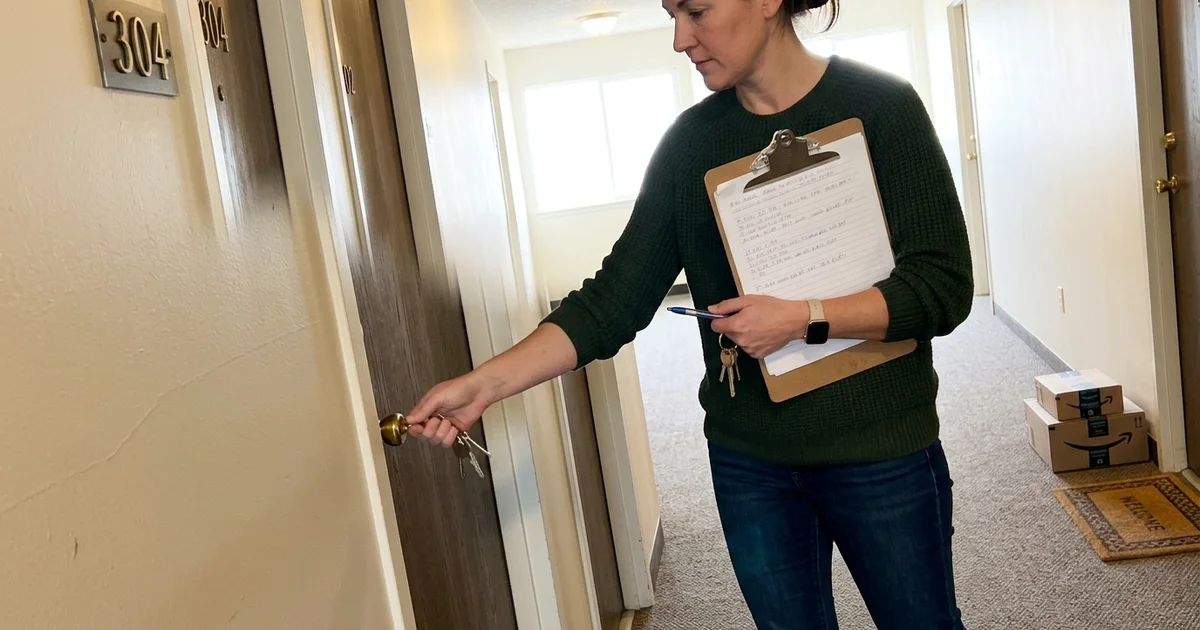
A tenant death puts a landlord in an unusual position. There is a family grieving, and there is a unit generating no income with a lease date approaching. Both are real, and neither is served by pretending the other does not exist.
This guide is the practical version, written for property managers and owners in Northeast Ohio. The work itself is Unattended Death Cleanup, and the operational reality is that discretion, speed, and documentation matter roughly equally.
What you can and cannot do first
You cannot enter the unit until the investigating agency releases it. That applies to you as owner exactly as it does to the family, and in Cuyahoga County the release is coordinated between the responding police agency and the Medical Examiner’s Office.
You also cannot dispose of the deceased tenant’s belongings on your own timeline. Ohio has requirements around abandoned property and personal effects following a tenant death, and an estate or next of kin may have claims. Get legal advice before removing anything that has value, and document everything you do remove.
What you can do immediately: call a remediation company to coordinate release timing and get an estimate prepared, notify your insurer, and stop the HVAC system from circulating air through the unit if you have access to the controls.
Do not have your maintenance staff open the unit to look
It is a biohazard scene, they are not trained or equipped for it, and it creates a liability exposure for you that did not previously exist.
Why time is the cost driver
Fluids continue penetrating for as long as the unit sits. The same scene is meaningfully more expensive to remediate after two weeks than after two days, because the scope expands from flooring to subfloor to joist cavity to whole-property odor.
| Time to discovery | Typical scope | Typical duration |
|---|---|---|
| Under 48 hours | Flooring and surface remediation | 1 day |
| Several days | Flooring, subfloor treatment, sealing, odor | 1 to 3 days |
| Two weeks or more | Subfloor removal, structural treatment, whole-unit abatement | 4+ days |
For buildings with regular welfare-check practices, that table is an argument for them. Several of our property-manager clients moved to a simple monthly contact policy after a delayed discovery, purely on the arithmetic.
Protecting the rest of the building
Multi-unit properties introduce a problem single-family homes do not: shared subfloor, shared basement cavities, and shared ventilation.
Fluids and odor migrate between units through all three. In Cleveland and Lakewood pre-war doubles this is not an edge case, it is the norm. We assess the adjacent unit as part of the initial walkthrough and tell you honestly whether it needs work.
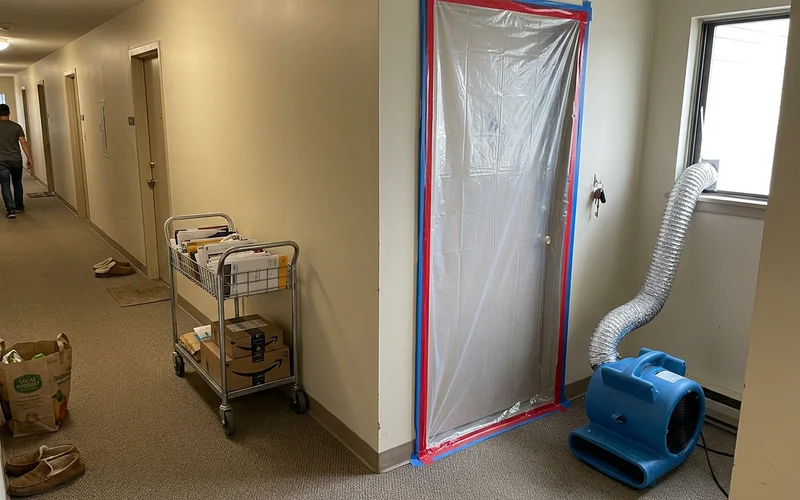
During remediation we seal the unit, run HEPA negative air so the work zone stays at negative pressure relative to the corridor, and seal shared vents. Occupied neighbouring units should notice nothing.
Discretion, for a reason that is also commercial
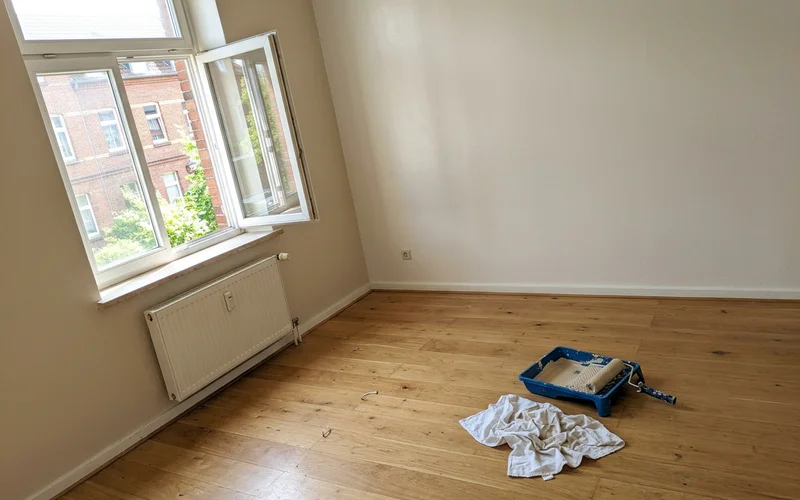
Word travels in a building. A unit with a story attached takes longer to lease and leases lower.
We arrive in unmarked vehicles with no company signage, stage equipment inside where possible, keep containers covered, and do not discuss a job with residents who ask. That protects the family, and it also protects the asset.
Documentation you will actually need
Turnover work generates paperwork requirements that a family cleanup does not.
- Before photographs establishing the condition at release
- Itemized scope of work performed
- Regulated Medical Waste disposal manifests
- Verification testing results confirming decontamination
- After photographs of the completed unit
- Certificate of insurance for your file
All of it arrives through the Client Portal as a single link you can forward to an owner, an insurer, an estate attorney, or a prospective tenant who has heard something and asked.
That last use is more valuable than it sounds. Being able to show a documented remediation record turns an awkward conversation into a straightforward one.
The money question
Responsibility for the cost varies by situation, and the wrong assumption is expensive.
Your dwelling policy may respond, subject to your deductible and any vacancy clause. The tenant’s estate may be responsible, which requires working with the executor. Where the death involved violent crime, the Ohio Crime Victims Compensation Program may reimburse eligible parties.
We will tell you which paths plausibly apply and produce documentation formatted for each. Our guide on who pays for unattended death cleanup in Ohio works through the scenarios in detail, including where a landlord’s policy typically responds and where it does not.
One request
If you have contact with the family, and many property managers do, pass on that they do not need to clean anything and should not attempt to. Families sometimes offer, out of a sense of obligation or embarrassment, and they should not be allowed to. It is a biohazard scene and there is nothing owed here that involves them going into that room.