
What the week actually looks like
People imagine hoarding cleanup as a very large rubbish removal. That is roughly a third of it. The other two-thirds are sorting and remediation, and both happen before and after the hauling that everyone pictures.
This guide walks through the sequence we use on every Hoarding Cleanup project, so that nothing about the days ahead is a surprise.
Before day one: assessment and written estimate
Everything starts with photographs. Send images of each room including the floors, from your phone, taken from the doorway. That is genuinely enough.
We assess severity against the ICD Clutter-Hoarding Scale, estimate volume and dumpster count, identify where remediation is likely to be needed beneath the accumulation, and return an itemized written estimate. This is free, there is no obligation, and we will tell you to get other quotes.
The estimate includes a day-by-day plan. That matters more than people expect, because it is what lets you coordinate with family, a landlord, an executor, or a health department deadline.
Day one: setup and sorting triage
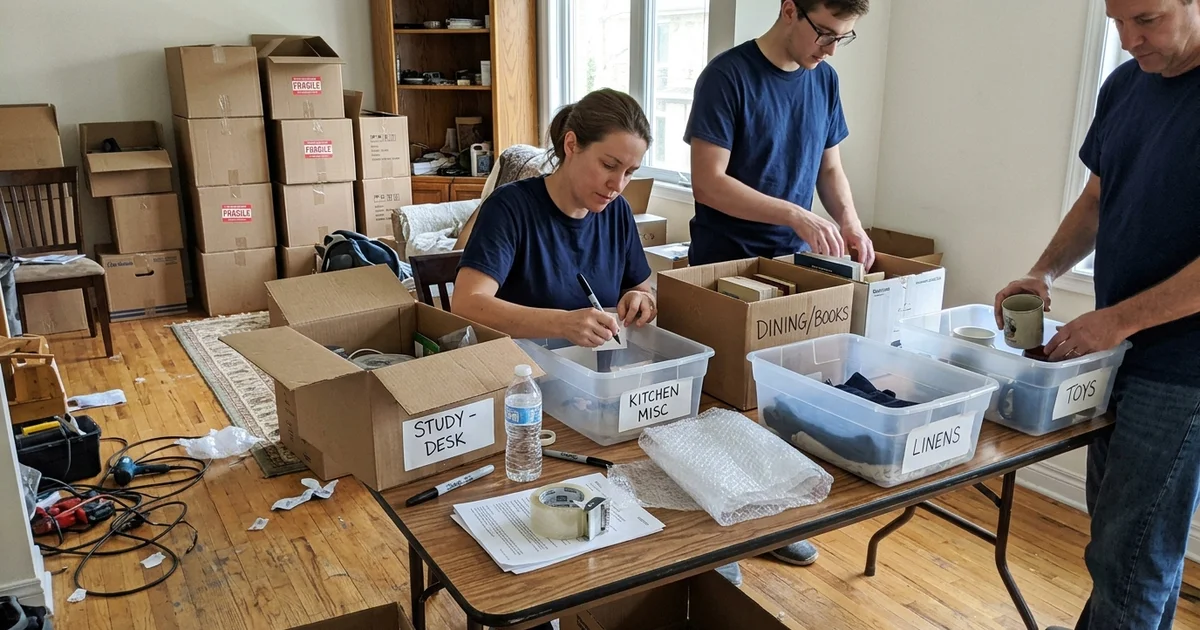
The first thing that arrives is not a dumpster. It is a folding table.
Crews set up a sorting station in the clearest part of the house and assign people to nothing but triage. Every room is worked systematically, and material is separated into keep, recover, donate, and dispose.
The recover category is why this step exists. In a home where accumulation has run for decades, valuable and irreplaceable items are not in a safe. They are in a shoebox under newspapers, inside a magazine, in a coat pocket, taped under a drawer. Cash, jewelry, deeds, titles, savings bonds, tax records, insurance policies, service medals, and photographs turn up on almost every job.
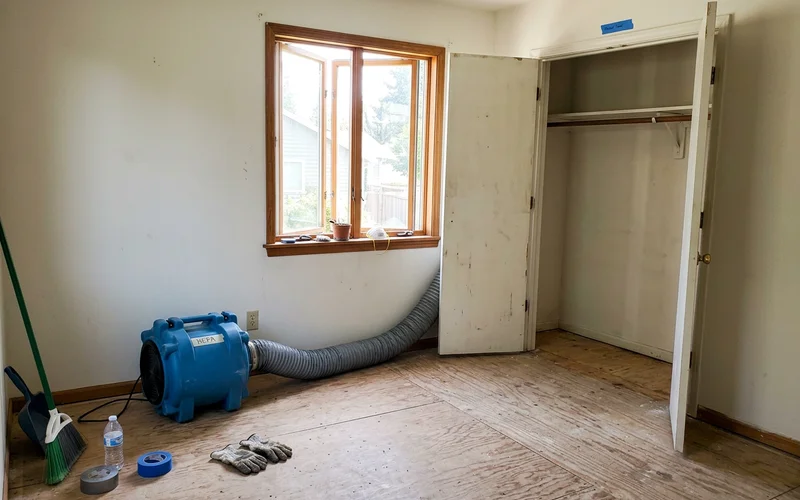
Containment goes up the same day where needed, along with HEPA air scrubbers, particularly if there is pest evidence, mould, or waste.
Nothing goes in the dumpster unreviewed
That is the rule that separates this from junk removal, and it is the reason a hoarding cleanup costs what it does.
Days one to three: hauling and dumpster logistics
Volume removal runs alongside sorting rather than after it. As bins fill and rooms clear, material moves out.
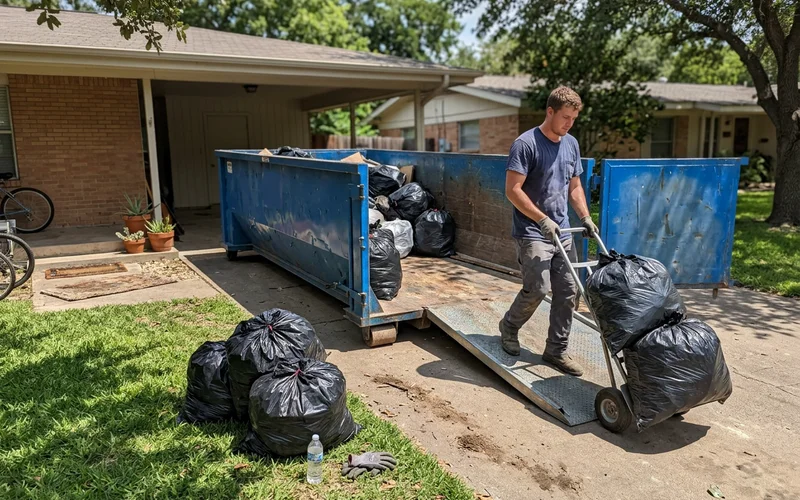
Dumpster staging is planned before the project starts. On a Parma or Brook Park driveway, single-width and close to the neighbour’s line, we size the container to the driveway and schedule swaps. On a Lakewood street with no driveway width at all, that may mean a right-of-way permit and a smaller container swapped more often. Either way it is arranged in advance so the crew never stops working while waiting on a haul.
| Severity | Typical dumpsters | Typical crew | Typical days |
|---|---|---|---|
| Level 1 | 1 | 2 to 3 | 1 to 2 |
| Level 2 | 3 | 3 to 4 | About 3 |
| Level 3 | Up to 6 | 4 to 6 | 4 to 6+ |
Days three to four: what was underneath
This is the part nobody photographs and the part that decides whether the result holds.
Once the floor is visible, the actual condition of the property becomes clear. Common findings: pet urine saturation into the subfloor, rodent droppings and nesting material along baseboards and in cavities, spoiled food and organic waste, mould where stacks sat against an exterior wall for years, and occasionally a plumbing failure nobody could reach.
That work is remediation, not cleaning:
- HEPA-filtered vacuuming for dander, droppings, and fine particulate
- Gross filth and organic waste extraction
- Disinfection of all hard surfaces with EPA-registered product
- Removal of saturated flooring and padding where contamination reached through
- Bio-enzymatic treatment of the subfloor to break down residual compounds
- Antimicrobial primer sealant over the treated substrate
- Odor neutralization at the source rather than masking
Skipping the sealing step is the single most common reason a cheaper job smells clean for a week and then does not.
The final walkthrough and documentation
At the end you get a walkthrough, a log of everything recovered with photographs, and a before and after report delivered through the Client Portal.
That documentation is not a nicety. In estate situations where siblings are spread across three states, a photographed log of what was recovered and where prevents the quiet resentments that follow a cleanout nobody witnessed. Where a health department order is involved, it is what you show the inspector.
What we need from you
Very little, and none of it on the day.
Tell us before we start if there are specific items to search for. Tell us if there are rooms not in scope. Tell us who is authorized to make decisions, particularly where an executor or a power of attorney is involved. And tell us honestly if the person whose home it is does not know we are coming, because that changes how we approach the whole project and it is a conversation we would rather have before day one.
If you want to know more about how the recovery side works, our guide on recovering valuables from a hoarded home covers the triage method and what turns up most often.