

The short answer
In most cases, yes. Ohio homeowner’s insurance policies typically cover crime scene, trauma, and unattended death cleanup as part of the dwelling coverage, minus your policy deductible.
This surprises people, and it matters a great deal, because the difference between a covered claim and an out-of-pocket expense is often several thousand dollars at a moment when nobody has capacity to think about money. The work itself is Crime Scene & Biohazard Cleanup, and the claim process for it is more straightforward than most people expect.
What follows is how it actually works, what to say to your adjuster, and where the edges of coverage sit.
What is usually covered
Coverage generally extends to the remediation work required to return the property to a safe, habitable condition. In practice that includes:
| Covered | Notes |
|---|---|
| Removal of contaminated materials | Carpet, padding, flooring, drywall, furniture |
| Regulated Medical Waste disposal | Manifested transport to a licensed facility |
| Disinfection and decontamination | EPA-registered virucide application |
| Subfloor treatment and sealing | Where fluids have penetrated |
| Odor remediation | Where it is part of returning the property to habitable condition |
| Reasonable restoration | Replacing what remediation had to remove |
Coverage applies whether the event was a homicide, a suicide, an unattended death, or a serious accident. Insurers do not generally distinguish between manner of death for the purposes of remediation coverage, which is worth knowing because families sometimes assume a suicide will not be covered. Usually it is.

Where the edges are
Being honest about what is not covered saves everyone a difficult conversation later.
Hoarding cleanup is generally not covered by homeowner’s insurance, because accumulation is not a sudden covered peril. There are exceptions where a covered event, such as a burst pipe or a fire, caused or worsened the condition. We will tell you plainly which category your situation is in rather than letting you discover it after the work is done.
Cosmetic restoration beyond remediation sits with you. If a bedroom needed its carpet removed, the claim covers replacing the flooring to a comparable standard. It does not cover upgrading the rest of the house.
Pre-existing damage unrelated to the incident is excluded, which is why documentation of the scene condition before work begins matters so much.
Vacant property clauses can complicate a claim if a home has been unoccupied for an extended period. If the property was empty for months, mention that to your adjuster early rather than have it surface later.
How to file, step by step
1. Notify early. Call your carrier within the first day or two. You do not need to have chosen a remediation company first, and you should not delay notification while you decide.
2. Get a claim number. Write it down. Everything afterwards references it.
3. Do not clean anything. Beyond the health risk, disturbing the scene before it is documented weakens the claim. Photographs of the original condition are the foundation of the file.
4. Choose your own company. Adjusters often suggest a preferred vendor. You are not required to use them. What the claim needs is a certified, insured company that documents its work properly.
5. Get a written, itemized estimate. Adjusters approve scope they can see. A vague lump sum invites questions; a line-by-line scope with photographs does not.
6. Provide documentation as the job proceeds. Before photographs, itemized scope, waste disposal manifests, verification testing results, and after photographs. We deliver all of this through our Client Portal so you can forward it to an adjuster in one link.
Photographs are the whole claim
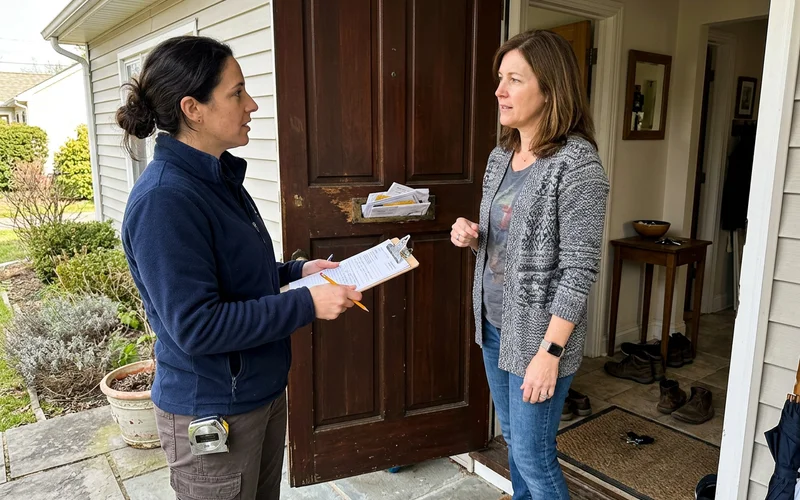
Almost every dispute we have seen between a homeowner and an adjuster came down to the absence of a documented before-condition. If you take nothing else from this page, take that.
What to ask your adjuster
Write these down before you call, because it is very hard to hold a list in your head this week.
- Is biohazard or trauma remediation covered under my policy, and under which coverage section?
- What is my deductible for this claim?
- Am I required to use a preferred vendor, or can I choose my own?
- What documentation do you need from the remediation company?
- Does this claim affect my premium at renewal, and by roughly how much?
- Is there a coverage limit specific to remediation?
- Does the policy cover replacement of the flooring and materials that had to be removed?
The premium question deserves a real answer before you file. For a smaller claim it can genuinely be worth paying out of pocket. For a five-thousand-dollar remediation it usually is not. Ask your agent directly and make the decision with the number in front of you.
If there is no insurance
You are not out of options.
Where the death involved violent crime, the Ohio Attorney General administers the Crime Victims Compensation Program, which can reimburse eligible families for cleanup costs. Our guide on Ohio crime victim compensation for cleanup costs covers eligibility, what qualifies, and the application process.
Where a tenant has died in a rental, the landlord’s dwelling policy or the tenant’s estate may carry responsibility rather than you personally.
And where none of those apply, tell us. We would rather have an honest conversation about scope and staging the work than have somebody walk away from a property that needs remediating because they assumed the answer was no.